
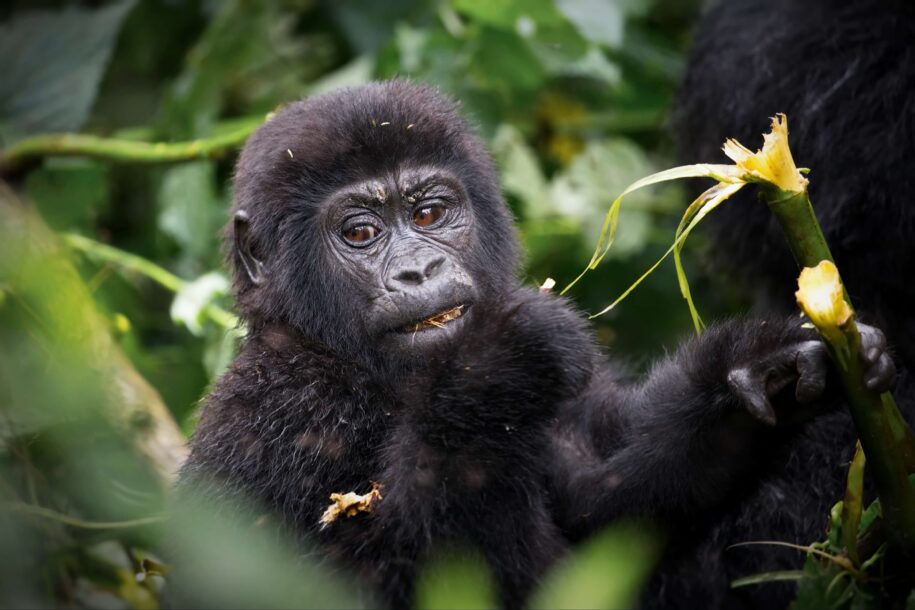
Mountain gorilla diet is a subject of scientific monitoring, ecological relevance, and logistical importance in the management of highland forests. Feeding behaviour shapes their movement, group structure, and range boundaries.
In Uganda, Rwanda, and the Democratic Republic of Congo, mountain gorillas inhabit montane and bamboo forests between 2,200 and 4,300 metres. Their survival depends on the seasonal availability of edible plant species within this altitude band.
Each day, a gorilla group forages for food over several kilometres. Their choices are selective, though often guided by rainfall patterns, elevation, and regrowth cycles within the habitat.
The mountain gorilla diet affects not only physical health but also reproductive success, energy budgeting, and exposure to human contact. As such, it plays a central role in tourism regulation, park zoning, and long-term conservation planning.
This article provides a structured breakdown of the mountain gorilla’s diet. It outlines dominant food types, seasonal shifts, feeding dynamics, and the methods used by researchers to track dietary behaviour across the Virunga range.
The Basics of a Mountain Gorilla’s Diet
Mountain gorillas are classified as folivores–frugivores, though their feeding behaviour skews heavily toward herbivory. Over 85 per cent of the mountain gorilla diet consists of fibrous plant matter.
They consume leaves, stems, shoots, and pith from over 140 recorded plant species, depending on local abundance and seasonal growth cycles.
Roots, bark, and epiphytic mosses form a smaller part of their diet. Mountain gorillas consume fruit opportunistically and vary sharply depending on elevation and rainfall.
Gorillas typically feed for 4 to 6 hours per day. In the remaining time, they travel, rest, and engage in social interactions. Food availability often dictates daily movement range.
Groups forage collectively, but selection is individual. Each gorilla pulls, strips, or peels food using hand–mouth coordination. Infants imitate feeding behaviour by observing mothers and siblings.
Unlike other great apes, mountain gorillas rarely drink water directly. Most hydration comes from plant moisture absorbed during feeding.
Their digestive system can easily break down cellulose. Fermentation occurs in the hindgut, where microbial processing extracts nutrients from coarse material.
If you’re visualising the diet as leaf-heavy, you’re not wrong—but the story goes deeper. Their feeding is ecological, methodical, and responsive to the seasons.
Primary Foods: What They Eat Most
The dominant portion of the mountain gorilla diet comprises leaves, stems, pith, and shoots from select herbaceous and woody plants. Gorillas consume these both for nutritional value and high moisture content.
In ecological terms, they are obligate terrestrial herbivores, favouring non-fruiting plant species available year-round. Feeding is volume-driven, not calorically opportunistic.
1. Herbaceous Vegetation (Majority Intake)
Species from the Urticaceae, Asteraceae, and Rubiaceae families dominate the daily intake. Among these, Galium spp., Aframomum spp., Thistle (Carduus spp.), and Peucedanum linderi are frequently recorded in dung analysis and field observation.
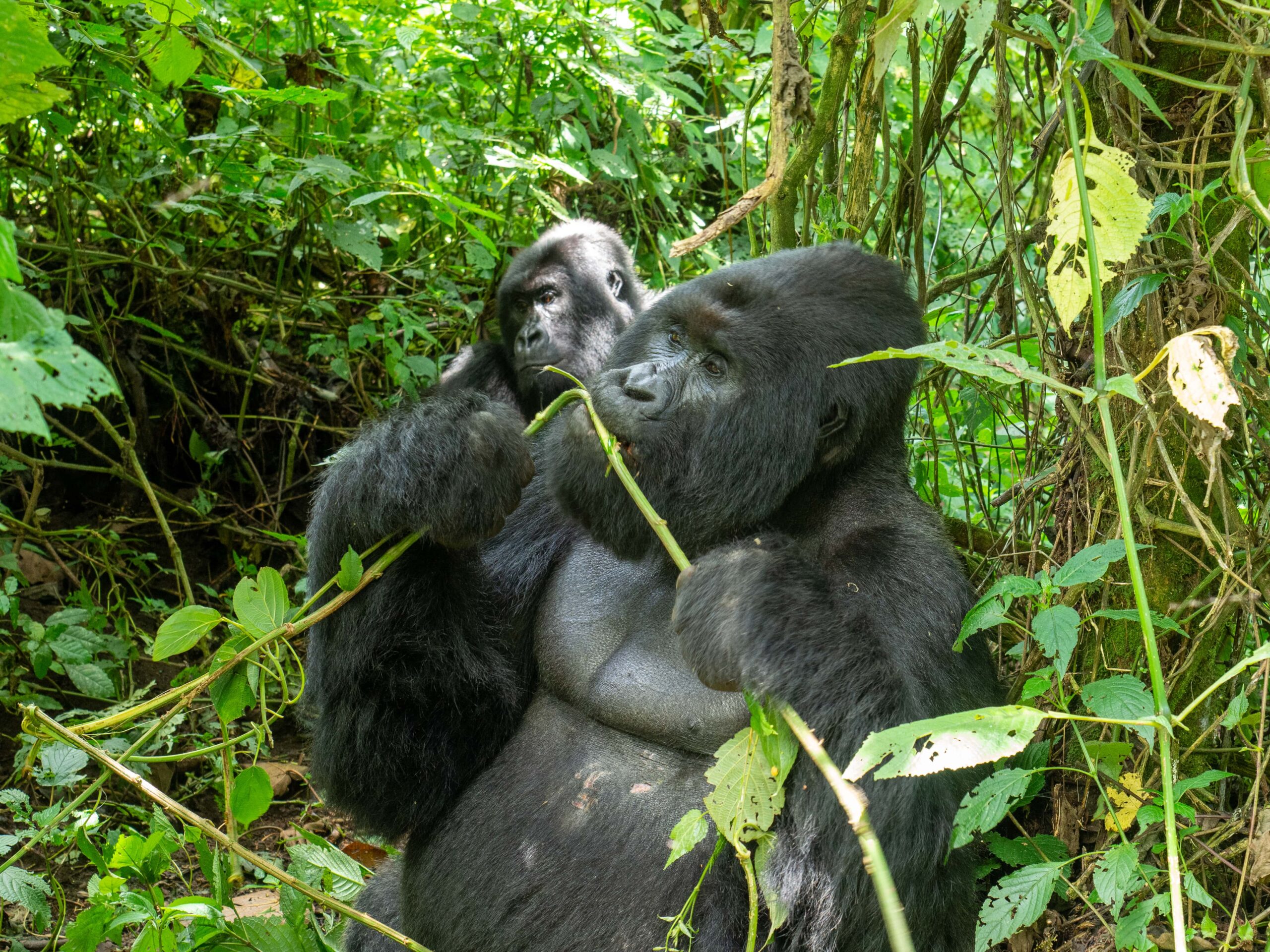
Gorillas consume the entire stalk, stripping outer layers to access the softer interior. They chew the stalks repeatedly to extract cellulose-bound fluids before discarding.
In regions of Bwindi, Rubus and Basella leaves provide significant dry-season resilience. They tolerate trampling and regrow rapidly, keeping foraging zones stable.
2. Shoots and Pith (Energy-Rich Tissue)
Young bamboo shoots (Arundinaria alpina) are a seasonal delicacy, rich in simple sugars and softer fibre. Gorillas target these mainly during wet months when new growth emerges.
The soft central pit of Urera and Celosia species is excavated with forceful hand–tooth coordination. The feeding session ends when the fibrous residue becomes unpalatable.
In elevation zones above 3,000 metres, gorillas consume Lobelia and Hagenia pits when herbaceous cover thins out.
3. Bark, Roots, and Woody Tissue
Bark and root material form a smaller but consistent supplement of the mountain gorilla diet. Gorillas strip bark using incisors, particularly from Erythrina, Myrianthus, and Ficus species.
These tissues are mineral-dense and may contribute trace elements absent in their primary herb layer. They chew roots briefly, mostly for moisture and texture.
4. Feeding Technique and Efficiency
Gorillas feed while stationary, seated quadrupedally, or in squatting positions. They may process one plant type for several minutes before shifting to another nearby source.
Foraging efficiency increases with age. Silverbacks and mature females waste less material than juveniles, who often mimic feeding without fully ingesting.
In practical terms, most feeding is opportunistic within a known home range. However, the selection is deliberate. Gorillas pass by non-preferred vegetation routinely to access specific species.
Seasonal Variations in Feeding
Mountain gorillas adjust their feeding patterns according to seasonal vegetation cycles. These changes are especially evident in regions above 2,500 metres, where rainfall patterns directly influence plant availability.
a. Wet Season Shifts
During the wet months; March to May and September to November, plant growth accelerates. New shoots, herbaceous stems, and soft leaves become abundant.
This period coincides with increased consumption of Aframomum stems, Galium leaves, and Peucedanum pith. Bamboo zones also become active during these intervals, particularly in Rwanda’s Volcanoes National Park.
Gorilla groups travel less during peak wet periods. Preferred forage grows in dense patches, reducing the need for extended movement.
b. Dry Season Adjustments
In the dry months; June to August and December to February, gorillas rely more heavily on woody plant parts and mature leaf species.
Stalks from Rubus, outer bark from Myrianthus, and fibrous stems from Carduus become more prominent. These offer lower water content but remain structurally available when softer vegetation recedes.
Group movements increase slightly during these months as forage becomes patchy and more widely dispersed. Ranges may expand by several square kilometres.
c. Elevation and Vegetation Zonation
Seasonal feeding and the mountain gorilla diet also depend heavily on altitude. During prolonged wet spells, gorillas descend slightly to exploit low-growth thickets that regenerate rapidly.
In drier periods, they ascend into transitional bamboo–montane zones. Here, fibrous vegetation persists longer, though food density is lower.
d. Phenological Tracking and Memory
Feeding behaviour reflects knowledge of plant cycles. Gorillas revisit specific sites after fixed intervals, timed to regrowth patterns.
Researchers have observed group returns to Celosia-dominated areas precisely four to six weeks post-cutting. This suggests spatial memory tied to seasonal rhythm.
If you’ve assumed their diet remains static, reconsider. It moves in cycles, mapped by rain, slope, and the growth habits of the forest floor.
Occasional and Supplementary Foods
A mountain gorilla diet occasionally consists of items outside their primary folivorous diet. These foods are infrequent but serve critical physiological or behavioural roles.
I. Wild Fruits
Fruits are consumed opportunistically and make up a small portion of annual intake. In some sectors of Bwindi, Ficus, Morus, and Syzygium species are seasonally available.
These are eaten whole, including skin and pulp. Fruit ingestion increases during transitional months when herbaceous ground cover is limited.
Consumption is typically brief. A group may focus on a fruiting tree for less than an hour before resuming foliage-based foraging.
II. Soil and Clay Intake (Geophagy)
In several recorded cases, gorillas ingest soil from exposed clay beds or mineral-rich mounds. This behaviour, termed geophagy, is believed to assist in mineral supplementation and detoxification.
The soils selected often contain trace amounts of sodium, calcium, and magnesium. Researchers also associate this behaviour with digestive buffering.
III. Ash and Charcoal
Gorillas have been observed consuming ash left by natural fires or human burn sites. Ash intake may contribute potassium and aid in neutralising plant toxins.
This behaviour appears irregular and site-dependent. In Virunga, it has been linked to areas previously used by illegal charcoal burners.
IV. Invertebrates and Animal Matter
Although rarely documented, ingestion of insects occurs unintentionally during bark stripping or while feeding near ant trails. There is no consistent evidence of targeted hunting or intentional protein intake.
Dried beetles or termites may be chewed along with pith or bark, but only in trace amounts. No vertebrate consumption has been recorded in habituated groups.
V. Water Intake
Direct water drinking is seldom observed. Instead, hydration comes from plant tissues, especially tender shoots and high-moisture leaves.
Only during extended dry periods might gorillas sip from puddles or leaf catchments. Even then, it is sporadic.
These dietary elements, though marginal in volume, contribute important minerals, hydration support, and adaptive behaviour. If overlooked, the mountain gorilla diet picture remains incomplete.
Feeding Behaviour and Social Dynamics
Feeding is one of the most time-intensive activities in mountain gorilla life. It influences group spacing, daily movement, and individual access to resources.
Adult silverbacks typically feed first and occupy central foraging positions. Their proximity to prime patches often restricts access by subordinates and juveniles. Females feed near the silverback but maintain a moderate distance, especially when accompanied by infants. Youngsters observe and mimic feeding actions before developing their preferences.
Gorilla groups begin feeding shortly after sunrise. They forage steadily for four to six hours, followed by a midday resting phase. Movements between feeding sites are dictated by vegetation density and nutritional yield. The group travels collectively but pauses individually to exploit micro-patches. Longer feeding bouts occur in areas with high pith or shoot availability. In poorer areas, short sessions are followed by frequent shifts in location.
Each gorilla uses both hands and teeth to manipulate food. Stripping, peeling, folding, and snapping are common mechanical actions during feeding. Feeding posture is usually quadrupedal or seated. Standing positions occur briefly when reaching for taller plants, especially in upland bamboo zones. Gorillas rarely compete aggressively for food. Dominance is expressed spatially rather than through physical contest.
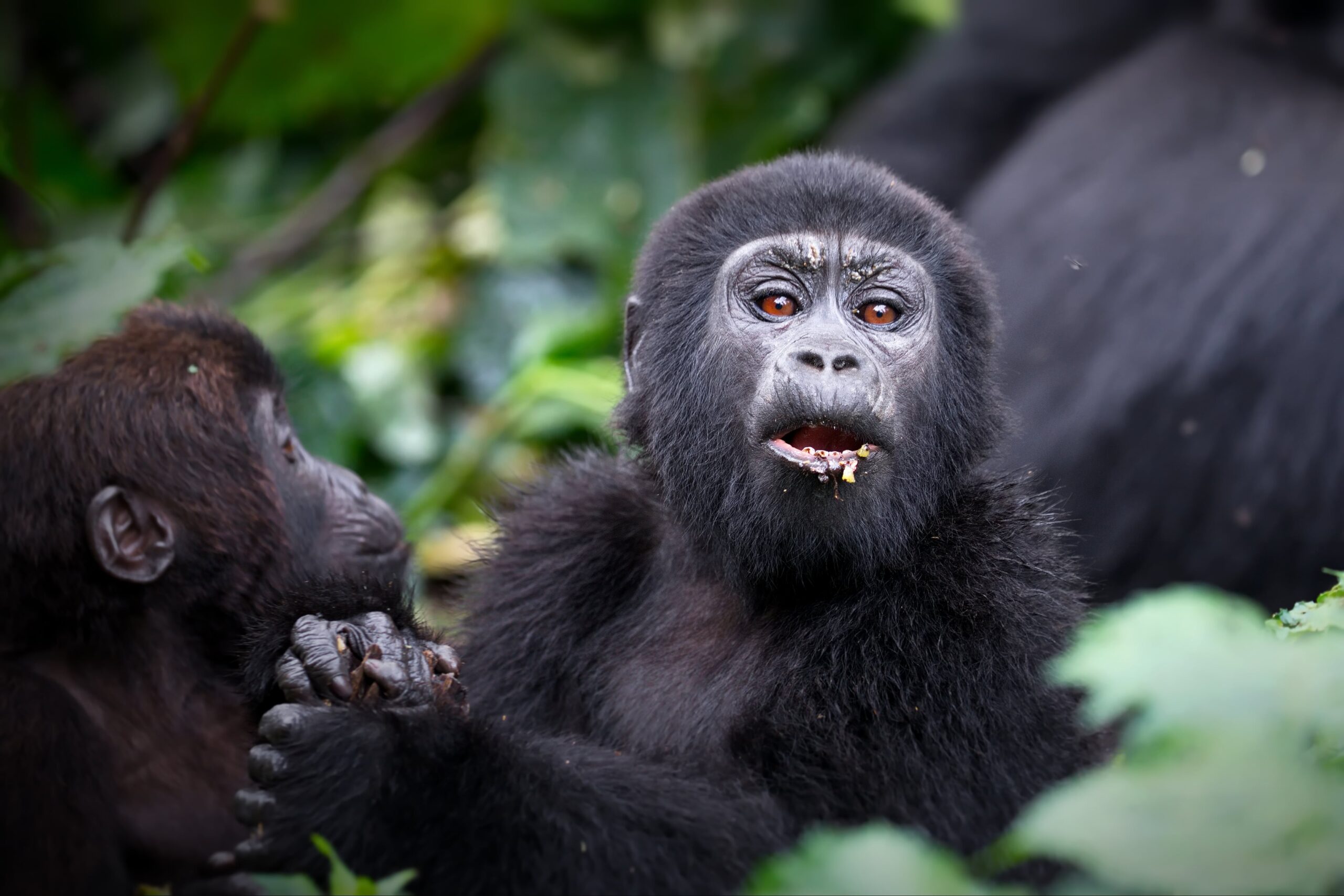
Feeding sites provide moments of cohesion and separation. While some individuals remain clustered, others isolate themselves to feed in silence. Juveniles often interact during feeding, sometimes exchanging food or mimicking elder techniques. These actions reinforce learning and establish early role behaviour.
Feeding, in essence, is not just an intake process. It is a structuring force in gorilla society—subtle, repeated, and tied to every movement they make.
Conclusion
A mountain gorilla diet and feeding follow a deliberate structure. It maps their relationship to space, memory, and the forest’s regenerative cycles.
Each choice; where to stop, what to strip, how long to remain, reflects an understanding embedded in group rhythm and ecological timing.
The act is repetitive, yet never passive. Feeding and dieting are shaped by observation and necessity.
To watch a gorilla feed is to witness an organism in full synchrony with its environment.
Leave a Reply
You must be logged in to post a comment.